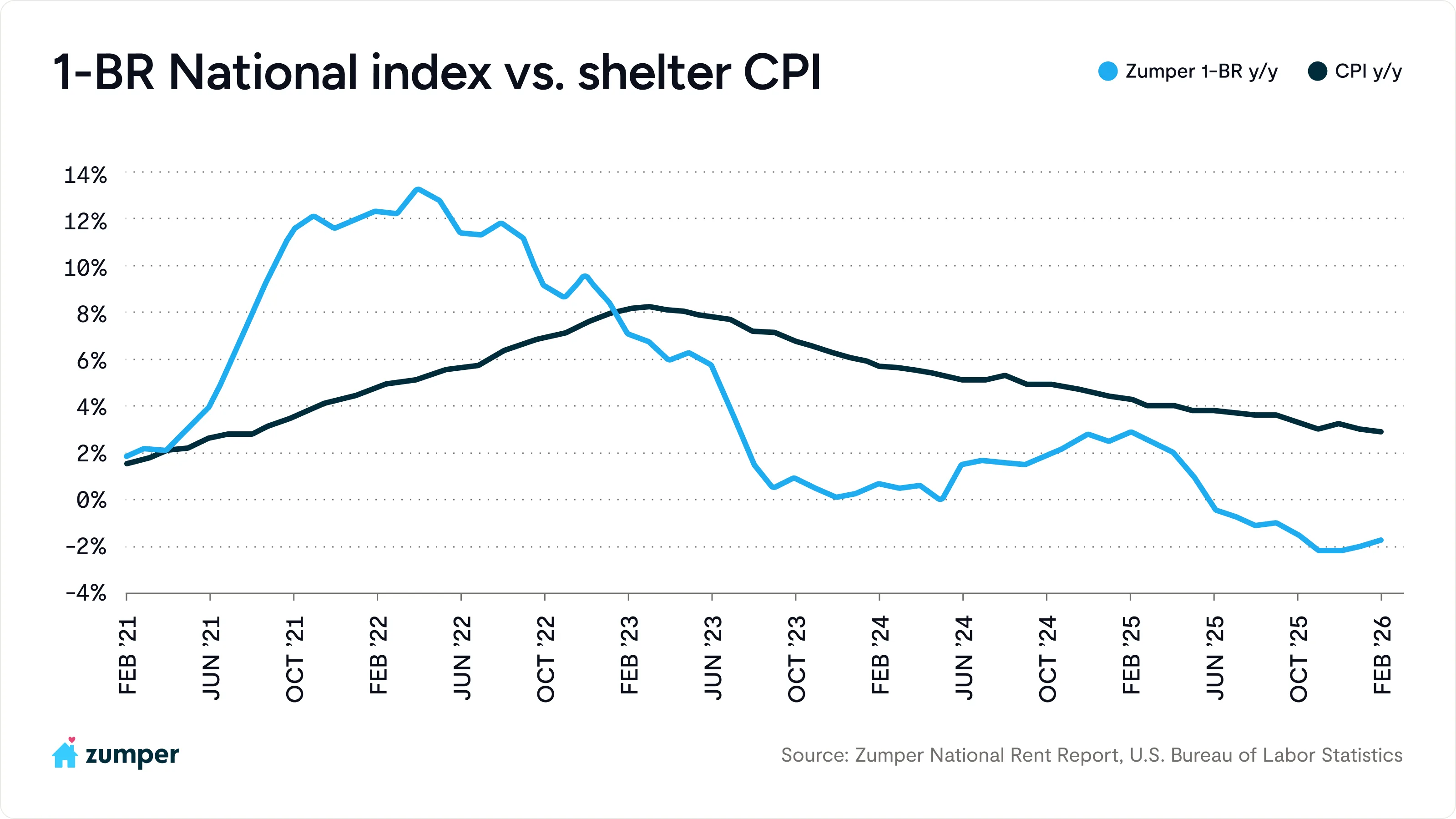
Zumper’s rent data provides insights to where the Consumer Price Index (CPI) is heading
Produced monthly by the The Bureau of Labor Statistics (BLS), the Consumer Price Index (CPI) is a measure of the average change over time in the prices paid by urban consumers for goods and services, including rent. Since the Cost of Shelter CPI uses existing paid rents, among other data points, as part of its calculation, there is a lagging nature to the CPI’s shelter cost component. Zumper’s data, however, serves as a leading indicator of shelter cost as we measure true market rents.
The persistence of elevated shelter inflation in official CPI readings has been one of the key factors keeping headline and core inflation above the Federal Reserve’s 2% target, with the Fed holding rates steady in recent months as policymakers weigh a slowing labor market against lingering price pressures. The Fed’s latest projections point to just one rate cut in 2026, with meaningful odds of no cut at all this year. But the lagged shelter CPI dynamic may prove to be a significant disinflationary tailwind as the year progresses. With Zumper’s market-rate rents already running negative year-over-year, the shelter component of CPI has considerable further room to fall, mechanically pulling headline inflation lower in the months ahead, even without any change in broader economic conditions. If that trend materializes as Zumper’s data suggests it should, the Fed may find it has more room to cut than current market pricing implies. However, Zumper’s March 2026 national rent data shows a monthly uptick in one-bedroom rents, a development worth watching closely. Given shelter’s outsized weight in inflation metrics, any sustained renewal of upward rent pressure could slow or reverse the disinflationary progress in the shelter CPI, complicating the Fed’s calculus and potentially pushing the timeline for rate cuts even further out.
Related content