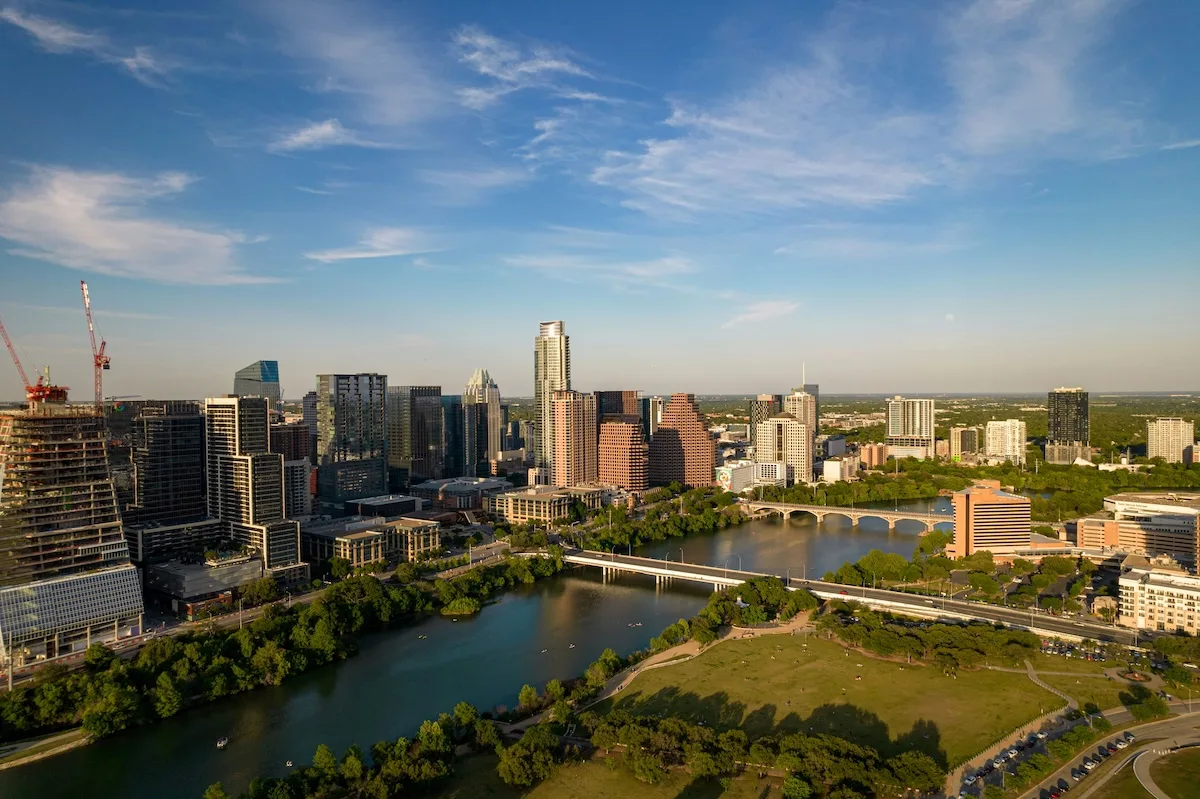
The largest cities in Texas by population are Houston, San Antonio, Dallas, Austin, and Fort Worth.
These cities anchor Texas’s biggest rental markets, offering everything from dense urban cores and major job hubs to lower-cost suburbs and border metros.
If you’re thinking about renting in Texas, population size matters more than you might expect. Bigger cities often mean more apartment inventory, wider rent ranges, more neighborhood options, and sometimes broader job markets, which can translate into a better chance of finding a place that fits your budget and lifestyle.
Below, we break down the largest cities in Texas by population and what each one means for renters right now.
Why a city’s population size matters
The population size of a city, especially within the context of its geographic size, can impact housing demand, and as a result the rental market. A few of the factors that can be affected include:
- Apartment availability. Larger cities tend to have deeper rental supply across price points and unit types.
- Neighborhood diversity. More people usually means more distinct neighborhoods, each with its own vibe and rent profile.
- Job concentration. The biggest Texas cities host the state’s largest employment hubs.
- Transit and infrastructure. Bigger populations often bring more transit routes, major highways, and large-scale development.
In short, the largest cities in Texas are also where most renters start their searches, because they offer the widest range of options.
The 10 largest cities by population in Texas
| Rank | City | Population rank in Texas | Rental market scale | Typical renter profile | What it’s known for | Why renters choose it |
|---|---|---|---|---|---|---|
| 1 | Houston | #1 | Massive | Young professionals, families, medical and energy workers, international renters | Energy, healthcare, aerospace, port economy, cultural diversity | Huge apartment inventory, wide rent range, strong job market, neighborhood variety |
| 2 | San Antonio | #2 | Very large | Military-affiliated renters, healthcare workers, families, remote workers | Military bases, tourism, healthcare, historic districts | More affordable big-city rents, slower pace, strong cultural identity |
| 3 | Dallas | #3 | Very large | Corporate professionals, tech workers, recent grads, transplants | Corporate HQs, finance, tech, entertainment districts | Career growth, new developments, walkable urban neighborhoods |
| 4 | Austin | #4 | Large and fast-growing | Tech workers, creatives, students, young professionals | Tech scene, music culture, outdoor lifestyle | Job growth, social scene, dense central neighborhoods, newer high-rises |
| 5 | Fort Worth | #5 | Large | Families, commuters, healthcare and aerospace workers | Cultural districts, historic stockyards, revitalized downtown | More space for the price, access to DFW jobs, less dense feel |
| 6 | El Paso | #6 | Large | Military families, logistics workers, cross-border professionals | Border trade, Fort Bliss, desert and mountain access | Lower rents, regional job stability, outdoor access |
| 7 | Arlington | #7 | Mid-to-large | Students, service workers, commuters, sports-industry workers | Major sports venues, entertainment hubs | Central DFW location, access to two major job cores |
| 8 | Corpus Christi | #8 | Mid-size | Service workers, port employees, military renters, coastal lifestyle seekers | Port economy, beaches, tourism | Coastal living, generally lower rents, outdoor recreation |
| 9 | Plano | #9 | Mid-size but dense | Corporate employees, tech workers, young families | Corporate campuses, mixed-use developments | Job proximity, newer apartments, suburban amenities |
| 10 | Laredo | #10 | Mid-size | Logistics workers, trade professionals, local families | International trade, border economy | Lower rents, tight-knit community, logistics |
1. Houston: the largest city in Texas
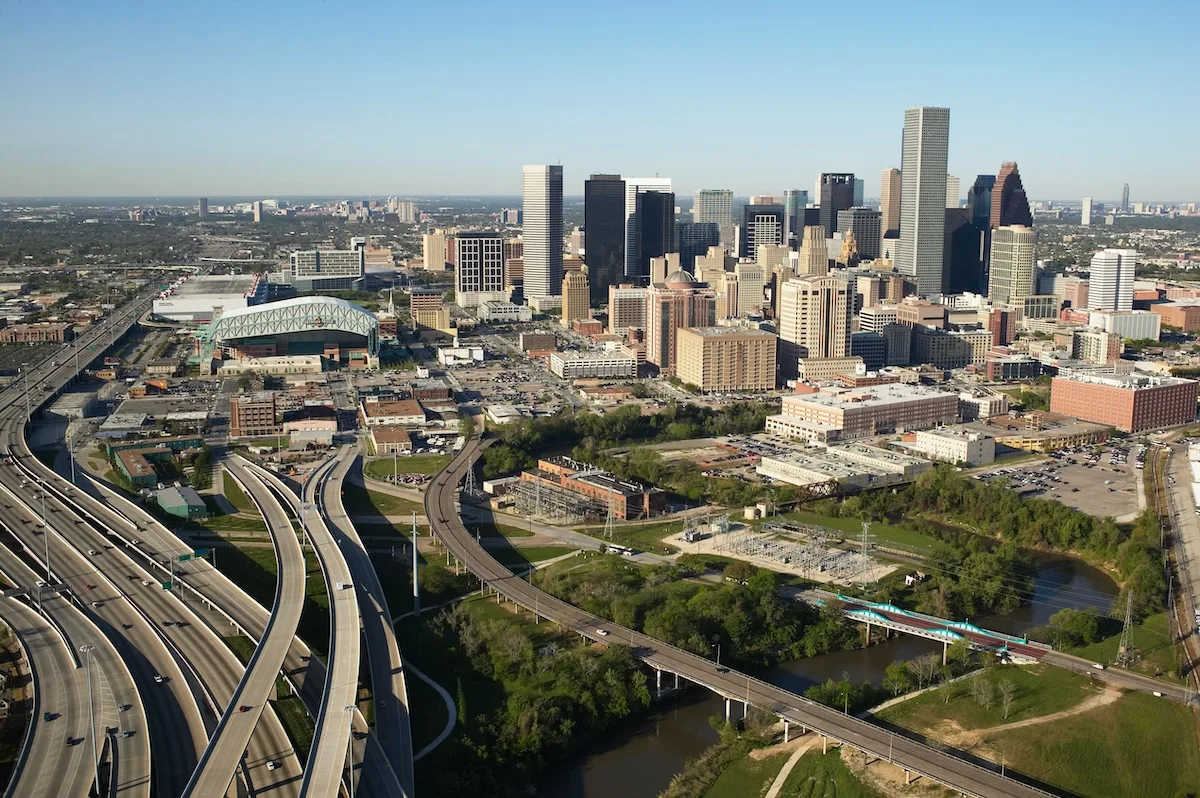
Houston is the most populous city in Texas and one of the largest cities in the U.S. It’s a massive, diverse metro anchored by energy, healthcare, aerospace, and shipping, with one of the most expansive rental markets in the country.
For renters, Houston stands out for its sheer range of neighborhoods and rents. At almost 700 square miles, you’ll find dense urban districts like Midtown and EaDo, master-planned communities on the outskirts, and quieter residential pockets in between. Houston’s median rent is about $1,550—which is 18% below the national rent median. And almost half of rentals in Houston are priced between $751-$1,500 per month, so there is a good chance of finding an apartment within your price range.
Why renters choose Houston:
- Huge apartment inventory across budgets.
- Strong job market with major employers.
- Cultural depth: food, arts, sports, and festivals year-round.
Houston’s size means flexibility. Whether you want a high-rise downtown or a lower-cost apartment farther out, you’ll usually have options.
2. San Antonio: big city scale with a slower pace
San Antonio is Texas’s second-largest city by population, and it feels very different from Houston or Dallas. It’s known for its military presence, healthcare sector, tourism economy, and strong cultural identity.
For renters, San Antonio often appeals to people who want big-city amenities without nonstop big-city intensity. Rents in San Antonio are also less intense than many other major metros. The city’s median rent of $1,465 is 23%, or $435, lower than the national average, making this a more affordable city for many renters.
Why renters choose San Antonio:
- Generally lower rents than other major Texas metros.
- Distinct neighborhoods with historic character.
- Steady job base in healthcare, defense, and education.
It’s a popular choice for renters looking to stretch their budget while still living in a major city.
3. Dallas: corporate hub of North Texas
Dallas is one of the largest cities by population in Texas and a core part of the sprawling DFW metroplex. It’s a major center for finance, tech, real estate, and corporate headquarters.
Dallas’s rental market is fast-moving, with constant new development across Uptown, Deep Ellum, Knox-Henderson, and North Dallas. While Dallas is still cheaper on average than the national rent median, prices have grown 5% in the last year, reaching $1,838 per month.
Why renters choose Dallas:
- Strong white-collar and tech job market.
- Dense cluster of walkable urban neighborhoods.
- A large volume of newer apartment buildings.
Dallas is often attractive to renters who want career mobility, nightlife, and newer housing stock.
4. Austin: the fastest-growing big city
Austin consistently ranks among the fastest-growing large cities in Texas. While smaller than Houston, San Antonio, or Dallas by population, Austin punches above its weight in influence, demand, and cultural footprint.
Austin’s recent growth has significantly affected the rental market. New high-rises, suburban expansions, and mixed-use districts continue to pop up across the city, contributing to steady rent price growth. As of early 2026, the median rent price in Austin is $1,800 (for rentals of all sizes).
Why renters choose Austin:
- A high concentration of tech and startup companies.
- Its highly active lifestyle and music culture.
- A young renter population.
Austin is great if you’re a renter who wants social energy, tech, and music job opportunities.

5. Fort Worth: large city, local feel
Fort Worth is the fifth-largest city in Texas and part of the greater DFW region. While it’s close to Dallas geographically, its identity is distinct and more relaxed. Prices, however, rival Dallas—the median rent in Fort Worth, for apartments and houses, is $1,800 a month.
Why renters choose Fort Worth:
- Generally, there is more space for the price in Dallas than in other cities.
- Revitalized downtown and cultural districts.
- Easy access to the wider DFW job market.
It’s a strong option for renters who want major-metro access without full Dallas density.
6. El Paso: Texas’s western gateway
El Paso is one of the largest cities in Texas by population and sits on the far western edge of the state along the U.S.–Mexico border. The city’s economy is shaped by international trade, the military, and logistics, which helps support steady housing demand.
Prices, though, point toward greater affordability: El Paso’s median rent is 21%, or $400, cheaper than the national average, sitting at $1,500 per month. While this is still more expensive than many renters can afford (the median income in El Paso is $59,745 according to the US Census), it is one of the cheaper major cities in Texas.
Why renters choose El Paso:
- Typically lower rents than most major Texas metros.
- Strong regional identity and food culture.
- Outdoor access to desert and mountain landscapes.
El Paso is often appealing to renters looking for affordability, space, and a smaller-metro feel within a large city.
7. Arlington: right in the middle of everything
Arlington sits between Dallas and Fort Worth and is one of the largest cities in Texas without a traditional downtown. It’s best known for major sports venues, entertainment districts, and its central location. Rents in Arlington average around $1,610 per month.
Why renters choose Arlington:
- Central access to DFW job centers.
- A mix of students, family, and young professional renters.
- Entertainment and event-driven economy.
It’s a good option for renters who want to commute flexibly across the metroplex.
8. Corpus Christi: coastal living at city scale
Corpus Christi is one of the largest coastal cities in Texas, with a population of over 300,000. The local economy is defined by tourism, energy, port activity, and military installations, which help support steady housing demand. In fact, average rent in Corpus Christi now hovers just above $1,500, up 11% since last year (as of early 2026).
Why renters choose Corpus Christi:
- Proximity to beaches and waterfront.
- Generally lower rents than inland major metros.
- Slower pace with city-level amenities.
For renters who value water access and outdoor living, Corpus Christi offers something few other large Texas cities can.
9. Plano: major population center in the suburbs
Plano is one of the largest cities in Texas and a major employment hub in its own right, not just a Dallas suburb. With numerous campuses, tech offices, and mixed-use developments, the city offers a plethora of housing options. These houses and apartments do come at a premium though, averaging around $2,155 per month.
Why renters choose Plano:
- Strong job concentration.
- Newer apartment communities.
- Highly developed retail and dining scene.
Plano often appeals to renters who want to be close to Dallas and all that it offers—career access, modern housing, etc—but don’t want to live in the dense urban core.
10. Laredo: border city with growing demand
Laredo rounds out the list of the largest cities in Texas by population. Its economy is closely tied to international trade, logistics, and border commerce. It is the city with the least expensive rent on this list: as of early 2026, rents here averaged just under $1,300 per month, making Laredo the most affordable of the largest cities in Texas.
Why renters choose Laredo:
- Important transportation and trade hub.
- Generally lower rents than major interior metros.
- Tight-knit community feel within a large city.
It’s an important Texas rental market, especially for renters working in logistics, customs, and cross-border industries.
How renters can use population data to narrow their search
Knowing the largest cities by population in Texas helps you quickly understand the scale of opportunity in each market—but it shouldn’t be the only factor you use.
When you’re comparing cities, it’s helpful to look at:
- Rent ranges across neighborhoods. Big cities often hide affordable pockets.
- Job access by industry. Population doesn’t always equal the right job mix.
- Lifestyle match. Density, transit, outdoor access, and social scenes vary widely.
- Growth patterns. Fast-growing cities can mean more new apartments—and more competition.
If you’re early in your search, start broad. Then use city-level filters, neighborhood browsing, and rent tools to improve your search.
Start your search in Texas cities, explore neighborhoods, and compare rents to see which of the state’s largest cities fits your budget and lifestyle best. Consider using a rent calculator, like the one on Zumper, to create a tailored list of apartments that fit your financial need.
Final takeaway
The 10 largest cities by population in Texas—Houston, San Antonio, Dallas, Austin, Fort Worth, El Paso, Arlington, Corpus Christi, Plano, and Laredo—are also home to the state’s most active rental markets.
Each offers a different mix of cost, career opportunity, neighborhood diversity, and lifestyle. Knowing their size might help you understand what kind of cultural and rental experience you’re likely to find.
Whether you’re chasing job growth, affordability, nightlife, space, or coastal access, Texas’s biggest cities give renters a big choice.
FAQs: Largest Texan cities by population
What is the largest city in Texas by population?
Houston is the largest city in Texas by population and geographic size. It has more residents than any other city in the state and is one of the largest rental markets in the country.
What are the five largest cities in Texas?
The five largest cities in Texas by population are Houston, San Antonio, Dallas, Austin, and Fort Worth. Together, they anchor most of the state’s major job centers and apartment supply.
Is Austin one of the largest cities in Texas?
Yes, Austin is one of the largest cities in Texas and consistently one of the fastest-growing. While smaller than Houston, San Antonio, and Dallas, Austin’s population growth and rental demand are among the strongest in the country.
Which large Texas city is best for cost-conscious renters?
San Antonio, El Paso, Corpus Christi, and Laredo are often more economical than Houston, Dallas, or Austin. Within any large city, specific neighborhoods can offer significantly lower rents.
Does a larger population mean more apartments?
Generally, yes. Larger cities usually have more rental inventory, creating more options across neighborhoods, price points, and building types.
What should renters look at besides population?
Rent levels, job access, neighborhood fit, commute patterns, city culture, and quality of life are just as important. Population size helps frame the market, but your daily experience will depend on where and how you live.
Related content