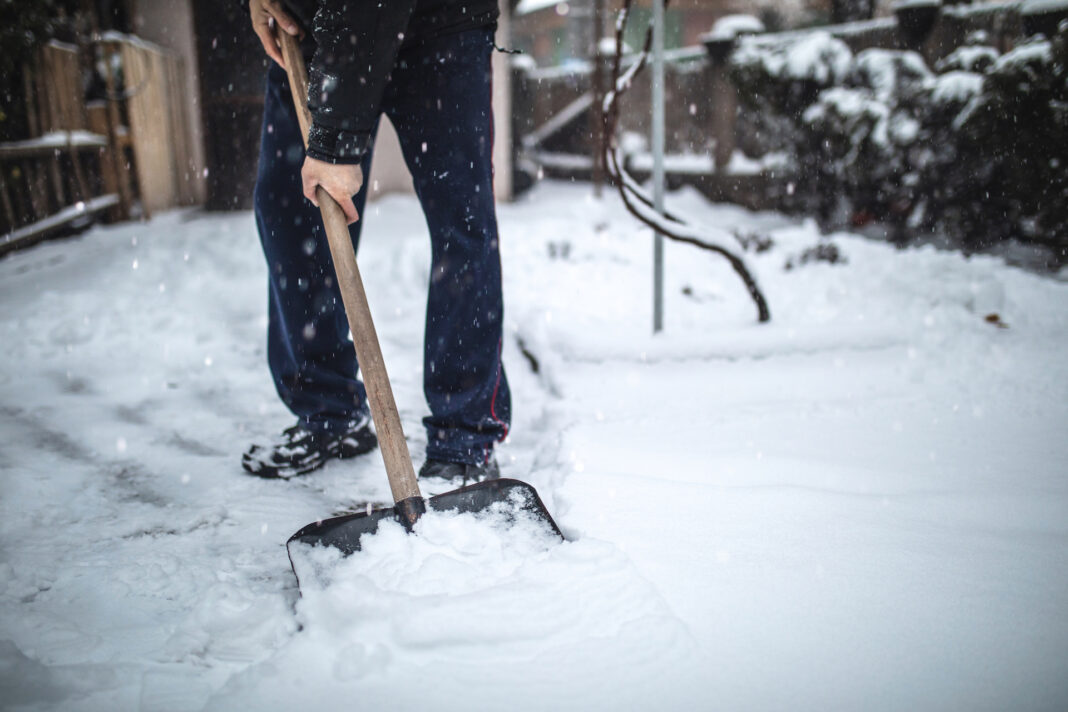
If you’re moving into a new place or you’re experiencing your first major snowfall at a new apartment, you’re probably wondering who is responsible for snow removal at your rental property. Generally speaking, there are certain maintenance tasks that landlords are usually responsible for and others that tenants are supposed to take care of. For example, if your washing machine breaks, you should call your landlord to get it fixed, but you’re responsible for replacing light bulbs.
But how does it work for shoveling snow? Are you responsible for shoveling snow in your driveway, or is your landlord? And how does your city or municipality come into it?
Who Is Responsible for Snow Removal at a Rental Property?
The short answer is: it depends.
Typically, in single-family homes, renters are responsible for removing snow, but in multifamily dwellings or apartment buildings, the landlord is often responsible.
If snow removal is not explicitly mentioned in your lease, then chances are that you as the renter are responsible for it. Many landlords, however, will include clauses in the lease that explicitly state that the landlord is responsible for removing snow from driveways and sidewalks. Either way, you should check the terms of your lease to figure out what you may be responsible for in terms of snow removal.
Snow removal laws vary by state, so you’ll want to check out state laws and local ordinances as well.
On the other hand, public agencies are typically responsible for dealing with snow in public spaces like streets and curbs, according to the rules of the Americans with Disabilities Act. But it depends on the district whether property owners or renters are responsible for cleaning other public places of snow and ice, such as sidewalks. Additionally, property owners or renters are usually responsible for clearing snow from public amenities alongside the sidewalk that spans their property, such as benches and fire hydrants.
A few more things to keep in mind, some jurisdictions place limits on how high snow can be piled up along walkways after it has been removed. Additionally, some places require the application of gravel, road salt, or other de-icing materials on sidewalks to prevent people from slipping. In some states, you can even get gravel or road ice at designated pickup points for free or for a small cost.
Finally, there may be some exemptions. The elderly and people with disabilities are typically exempt from snow removal ordinances.
Why is it important to know who’s responsible for snow removal?
You’ll want to figure out who is responsible for snow removal before the first major snowfall in your area. That’s because you could be held responsible for snow that isn’t shoveled on your rental property and could even face fines for failing to remove it.
While the rules vary by city or state, generally speaking, municipalities require someone, whether that’s the landlord or renter, to keep public sidewalks and walkways clear of snow and ice. Often there’s a fairly tight time frame for snow and ice removal of 24 to 48 hours after snow has stopped falling. Local laws may also include specific clauses about how to ensure that walkways are de-iced after shoveling by putting down sand or salt.
You should also keep in mind that there are typically rules about how snow should be stored once it’s removed. You can’t just shovel snow onto the road, which is considered to be public property, or from your driveway onto a public sidewalk. Removed snow must usually be stored on private property, which means shoveling the snow into your front yard.
For example, New York City renters are obligated to follow the New York City Department of Sanitation rule that states, “every owner, lessee, tenant, occupant or other person having charge of any lot or building must clean snow and ice from the sidewalks adjacent (i.e., in front of, on the side of, in back of) to their properties.” So, if you’re responsible for snow removal according to your lease, you may be held accountable if you fail to shovel the snow in a timely manner. In fact, New York City imposes a fine of $100 to $350 per building for failure to remove snow.
If you are in fact responsible for snow removal from your rental property, make sure you’re equipped with the right stuff, including snow shovels and road ice or a snowblower, before the first snowfall. It may be difficult to get to a store to purchase these items in a snowstorm, and there’s a chance they could be sold out once you get there. If you’re willing to spend a bit more money on it, you could even hire a snow shoveling service to take care of it for you.
In short? Check your lease.
At the end of the day, the best way to determine who is responsible for snow removal at a rental property is to check the terms of your lease. If your lease does not explicitly state who is responsible, check in with your landlord to make sure that you’re on the same page. If you are responsible for snow removal, you may be able to negotiate to have your landlord provide you with a snowblower or a snow shovel and road ice or gravel so you don’t have to purchase those items yourself.
You and your landlord may also need to communicate about the details of snow removal. For example, your landlord may ask you to move your car out of the driveway at a certain time so that she or he can plow.
Make sure you know whether you or your landlord are responsible for snow removal to avoid potential fines and to make sure sidewalks are safe for everyone to use.
Contenu associé