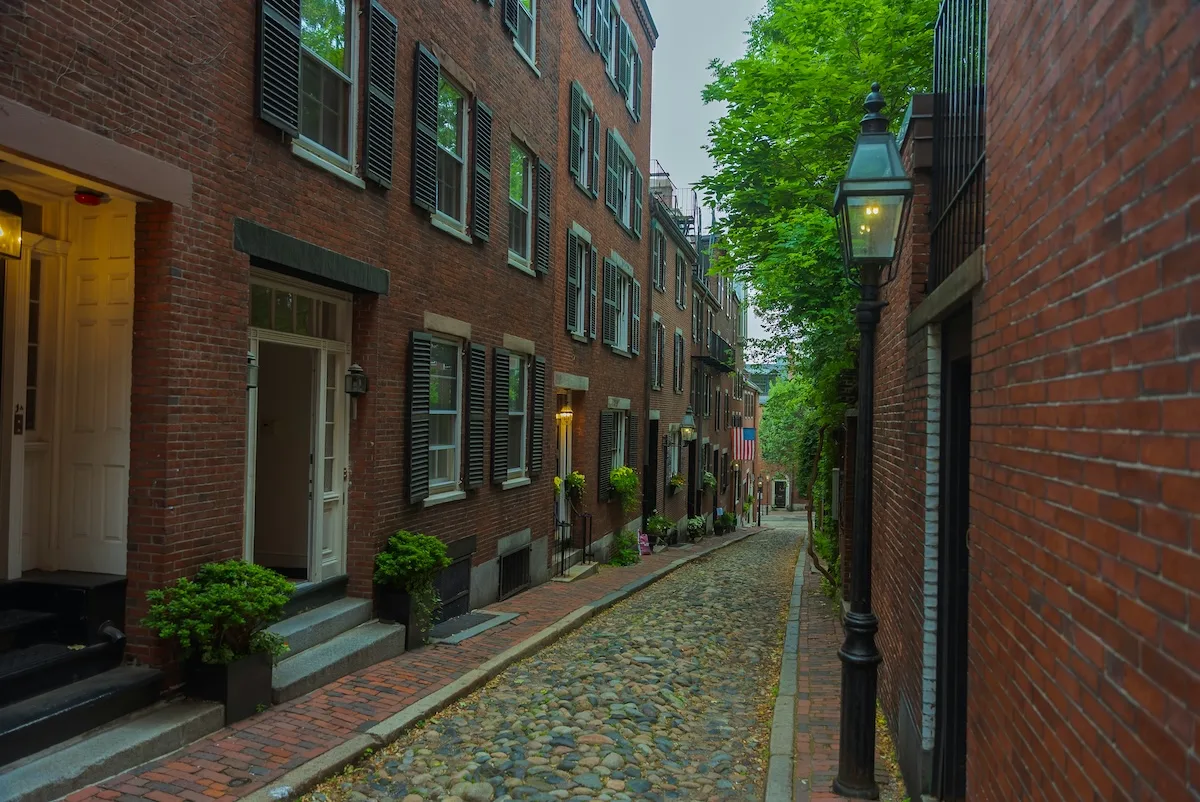
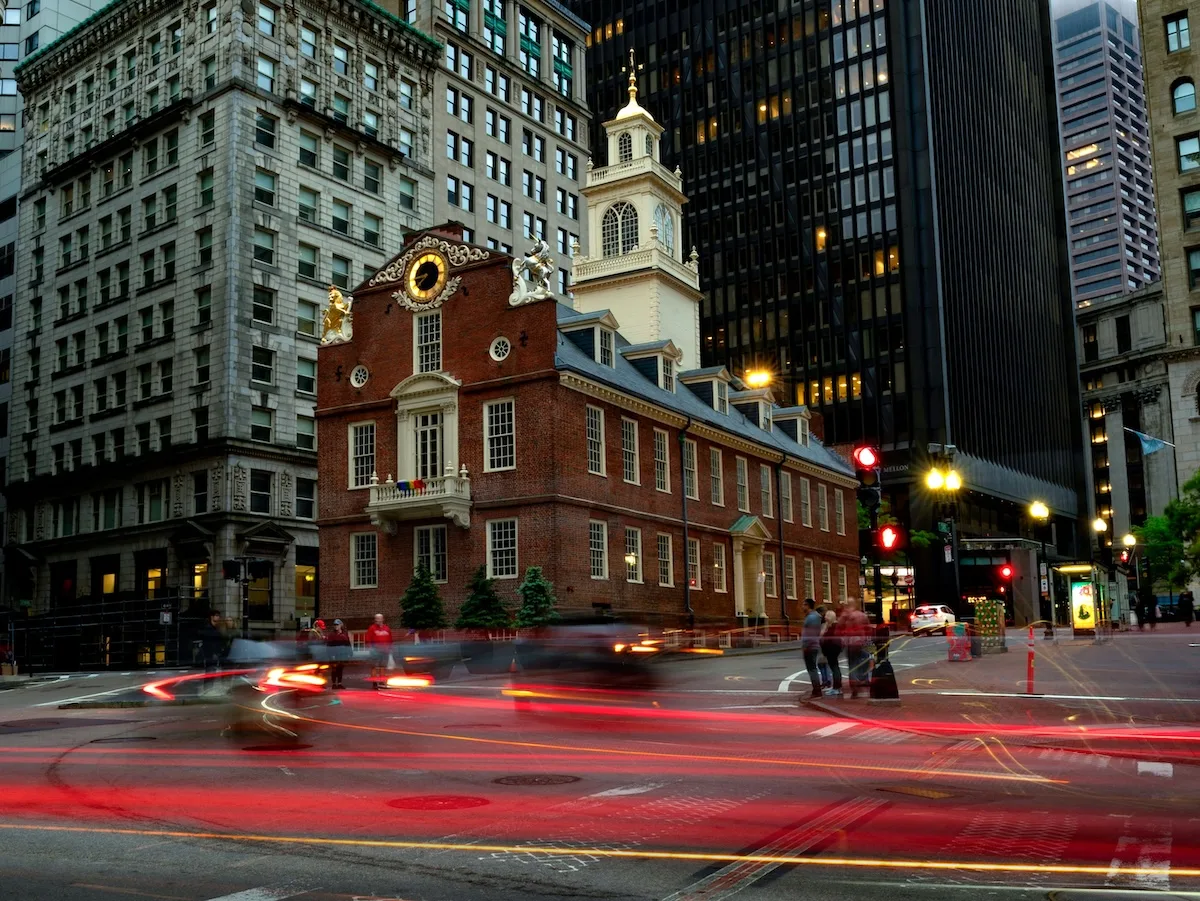
If you’re looking for alternatives to Boston’s housing costs, several nearby cities could help you save a little on rent while keeping you close to Boston’s job market and culture, and many of them have perks and draws all their own. Cambridge ($3,200), Somerville ($3,000), and Quincy ($2,500), for example, deliver savings up to $775 monthly with quick T access to downtown, and are great areas with their own flare.
Many renters explore cities near Boston to stretch their housing budgets, gain more living space, or find neighborhoods that better match their lifestyle. The Greater Boston metro area offers excellent alternatives within 4-11 miles of downtown, each with a distinct character and rental costs often below Boston proper.
So, whether you’re seeking urban energy close to the city or more suburban space at lower prices, the Greater Boston area provides diverse choices for renters at different price points.
Why consider living near Boston?
Boston ranks among the nation’s most expensive rental markets, but moving just a few miles from downtown opens up more affordable options while preserving access to the city’s world-class employers, universities, healthcare facilities, and cultural attractions.

Main benefits of living in a city near Boston:
Significant cost savings: Cities like Quincy ($2,500 median) and Dedham ($2,700) offer 18-24% savings compared to Boston’s $3,275 median rent.
More space for your money: Rental dollars stretch further in nearby communities. The same budget securing a small Boston studio might get you a spacious one-bedroom or two-bedroom in Quincy or Milton.
Reasonable commutes: Most nearby cities offer commutes between 20 and 40 minutes to downtown via MBTA subway, commuter rail, or bus. Cambridge and Somerville enjoy some of the shortest commutes with direct Red and Orange Line access.
Trade-offs to consider:
Living near Boston means weighing commute time against rent savings, and potentially fewer walkable restaurants and entertainment venues. However, Cambridge, Somerville, and Newton offer vibrant downtowns with their own dining and cultural options. Transit access varies. Cambridge and Somerville provide the most robust connections, while Milton and Dedham rely more on commuter rail or buses.
Greater Boston rental market overview
The Greater Boston metro area, home to approximately 4.9 million people, is one of the most expensive rental markets in the US. Its demand is driven largely by Boston’s universities, hospitals, biotech firms, and financial services. Boston is not often considered affordable, with median rent hovering around $3,275, while nearby cities range from $2,500 to $3,600.
Cities with strong MBTA connections command higher rents but still offer savings compared to Boston. Recent trends show varied year-over-year changes: Cambridge remained stable (+0.13%), Somerville saw declines (-6.25%), and Newton posted gains (+9.09%).
6 Great cities near Boston for renters
1. Cambridge – 4.3 miles | Median rent: $3,200
Cambridge delivers urban sophistication rivaling Boston with Harvard Square’s charm, Kendall Square’s innovation hub, and Central Square’s eclectic energy. This city of 121,000 combines world-class universities, including Harvard and MIT, with thriving biotech, creating a dynamic community feeling distinctly separate from yet intimately connected to Boston. Cambridge offers exceptional access via multiple Red Line stops providing 10-15 minute rides to downtown.
Rent: $3,200 median offers modest $75 monthly savings ($900 annually). Studios start at around $2,540; 2-bedroom units average $3,595.
Transit access: 8.2/10 | Walkability: 9.3/10
Best for: Tech, biotech, and academic professionals; renters prioritizing walkability and culture; city living without technically living in Boston.
2. Somerville – 5.3 miles | Median rent: $3,000
Somerville blends urban energy with neighborhood charm across Davis Square (cafes, live music), Union Square (artisan food), and Assembly Row (waterfront shopping). This city of 82,000 attracts creative professionals and young families seeking Boston’s vibrancy at lower costs. Red Line (Davis, Porter) and Orange Line (Assembly) stations, frequent buses, and 20- to 25-minute commutes to downtown Boston make Somerville one of the region’s most transit-connected cities.
Rent: $3,000 median saves $275 monthly ($3,300 annually). Studios: $2,350; 2-bedrooms: $3,100. The year-over-year decline of 6.25% indicates a cooling market, where renters may have more negotiating power.
Transit access: 7.9/10 | Walkability: 9.3/10
Best for: Artists and creatives; renters seeking neighborhood character; young professionals wanting walkable urban living at a lower cost.
Somerville rentals
3. Quincy – 5.5 miles | Median rent: $2,500
Quincy, the “City of Presidents,” offers the best value among Boston’s immediate neighbors. This diverse city of 103,000 combines coastal charm (Wollaston Beach), historic sites (Fore River Shipyard, Granite Railway Incline), and excellent Asian restaurants.Four Red Line stations provide direct 25- to 30-minute access to downtown.
Rent: $2,500 median rent delivers $775 monthly savings ($9,300 annually), representing the most significant savings among communities close to downtown. Studios: $2,050; 2-bedrooms: $2,675.
Transit access: 4.5/10 | Walkability: 5.7/10
Best for: Budget-conscious renters; families wanting coastal access and a suburban feel; anyone prioritizing maximum savings while having access to the T.
4. Newton – 6.5 miles | Median rent: $3,600
Newton, an affluent community of 91,000, offers suburban tranquility, exceptional schools, parks, and upscale villages with distinct character. This “Garden City” attracts families and professionals seeking top-tier schools and green space. Green Line D branch serves multiple villages with 30- to 40-minute downtown commutes.
Rent: The median rent actually exceeds Boston’s by $325 monthly, reflecting the premium for schools, safety, and suburban amenities. Studios: $2,500; 2-bedrooms: $3,200. Year-over-year increase of 9.09% indicates strong demand.
Transit access: 5.3/10 | Walkability: 6.3/10
Best for: Families prioritizing top schools; professionals who prefer a suburban lifestyle over a dense urban one; renters wanting green space despite higher costs.
5. Milton – 4.8 miles | Median rent: $2,750
Milton, a quiet town of 29,000, delivers suburban living closest to Boston. Blue Hills Reservation provides hiking, skiing, and outdoor recreation, while the town boasts strong community and excellent schools. The Mattapan Line provides access, though downtown commutes average 35-40 minutes.
Rent: $2,750 median offers $525 monthly savings ($6,300 annually).
Transit access: 5/10 | Walkability: 7/10
Best for: Outdoor enthusiasts; families wanting Boston proximity with suburban feel; renters prioritizing quiet residential neighborhoods and nature access.
6. Dedham – 6.5 miles | Median rent: $2,700
The historic town of Dedham, with a population of 25,000, balances suburban tranquility with convenient access to Boston and major highways (I-95, Route 1). Legacy Place provides retail and dining, while the town center maintains New England charm. No direct subway means most residents drive or take buses, resulting in 30-45 minute commutes.
Rent: $2,700 median saves $575 monthly ($6,900 annually). Studios: $2,395; 2-bedrooms: $2,825. Limited inventory (96 units).
Transit access: 3.6/10 | Walkability: 5/10
Best for: Commuters with cars; families wanting suburban living with highway access; renters seeking affordability without requiring T access.
Rental comparison: Boston’s nearby cities
| City | Median Rent | Monthly Savings | Distance | Transit | Walk Score |
| Cambridge | $3,200 | $75 | 4.3 mi | Red Line | 9.3 |
| Somerville | $3,000 | $275 | 5.3 mi | Red/Orange | 9.3 |
| Quincy | $2,500 | $775 | 5.5 mi | Red Line | 5.7 |
| Newton | $3,600 | -$325* | 6.5 mi | Green Line | 6.3 |
| Milton | $2,750 | $525 | 4.8 mi | Mattapan Trolley Line | 7.0 |
| Dedham | $2,700 | $575 | 6.5 mi | Bus | 5.0 |
*Newton costs more than Boston
How to choose the right city near Boston
Define your budget: Calculate savings with the Zumper Rent Calculator. Quincy delivers maximum savings ($9,300 annually) with T access, while Somerville offers moderate savings ($3,300 annually) with exceptional walkability.
Consider lifestyle: Urban renters prioritizing walkable neighborhoods should explore Cambridge and Somerville. Family-oriented renters seeking yards and highly-rated schools might prefer Newton or Milton.
Evaluate your commuting needs: For daily downtown access, focus on direct T connections: Cambridge, Somerville, and Quincy offer the most reliable transit. For car commuters, Newton, Dedham, and Milton provide highway access.
Factor in total costs: Beyond rent, consider parking, car ownership, and transportation. A lower-priced apartment in a car-dependent location may not save money overall.
Making your Boston area move
The Greater Boston area’s diversity means renters at nearly every budget can find suitable options. So whether you’re drawn to Cambridge’s intellectual energy, Somerville’s artistic vibe, Quincy’s coastal value, or Newton’s suburban excellence, each offers distinct advantages while maintaining a connection to Boston’s opportunities.
Start by identifying your non-negotiables, like commute time, budget, walkability, schools, and then explore communities that check those boxes. The key advantage: you’re not locked into one choice. As your situation evolves, the region offers relocation options that let you stay connected to the same job market and community.
Browse apartments across the Greater Boston area to find your next home.
Frequently asked questions about cities near Boston
Which cities are near Boston?
The closest cities include Cambridge (4.3 miles), Milton (4.8 miles), Somerville (5.3 miles), Quincy (5.5 miles), Newton (6.5 miles), and Dedham (6.5 miles), with median rents ranging from $2,500 to $3,600. Cambridge and Somerville offer the most urban environments with exceptional walkability, while Newton, Milton, and Dedham provide more suburban character.
What is the cheapest city near Boston?
With a median rent of $2,500, Quincy is the most affordable city near Boston, offering $775 in monthly savings ($9,300 annually) compared to Boston’s $3,275 median rent. Quincy offers excellent access to Boston via four Red Line stations, with downtown commutes of 25- 30 minutes. The city combines coastal amenities, diverse dining, and historic sites while delivering the best value proposition among Boston’s immediate neighbors.
Why consider living near Boston instead of in the city?
Living near Boston offers significant cost savings—up to $9,300 annually in Quincy—while maintaining access to Boston’s job market. Nearby cities provide more space for your budget. Communities like Cambridge and Somerville offer vibrant downtowns, while suburban options like Newton provide excellent schools and green space. The trade-off involves 20-40 minute commutes depending on location.
How long is the commute from Cambridge to Boston?
The commute from Cambridge to Boston takes 10-15 minutes via the Red Line, serving Harvard Square, Porter Square, Central Square, and Kendall Square. This makes Cambridge one of the fastest commutes among Boston alternatives. Cambridge’s transit score (8.2) and walkability (9.3) mean many residents reach downtown faster than residents of some Boston neighborhoods.
Is Somerville a good alternative to Boston?
Yes, Somerville offers an excellent alternative with a $3,000 median rent, saving $275 monthly ($3,300 annually) while maintaining exceptional walkability (9.3) and strong transit (7.9). The city features distinct neighborhoods—Davis Square, Union Square, and Assembly Row—each with unique character. Year-over-year rent declines of 6.25% suggest favorable conditions for new renters.
What income do you need to rent in Cambridge?
To afford Cambridge’s $3,200 median rent, you need an income of approximately $128,000 annually, using the 30% budgeting guideline (no more than 30% of someone’s pre-tax income should go toward rent). For a studio ($2,540), you’d need to earn roughly $101,600 annually, while a 2-bedroom ($3,595) requires approximately $143,800. Roommates splitting the median rent would each need about $64,000 annually.
Does Newton have good public transportation to Boston?
Newton has adequate transportation via the Green Line D branch, serving multiple villages with 30-40 minute downtown commutes. The city’s transit score (5.3) and walk score (6.3) reflect its suburban layout: most residents need vehicles for commuting to work and running daily errands. However, the Green Line provides reliable service for those accepting longer commutes in exchange for Newton’s amenities and schools.
Are there affordable cities near Boston with good schools?
Yes, Newton and Milton offer excellent schools at varying price points. Newton has top-rated schools, but also premium rents ($3,600 on average, which is higher than in Boston). Milton also has strong schools, with slightly more accessible pricing ($2,750). Quincy is a good option, with a solid school district and the most affordable rents ($2,500) among cities with direct T access. Milton provides perhaps the best combination of school quality, housing costs, and commute convenience.
Related content