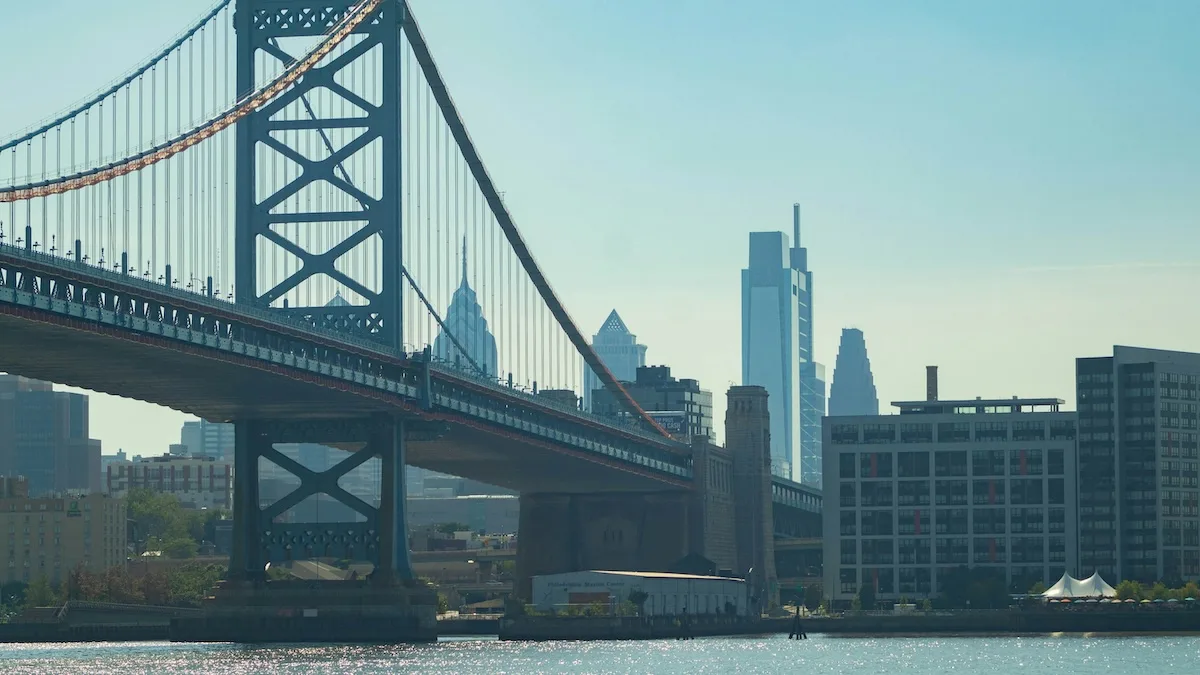
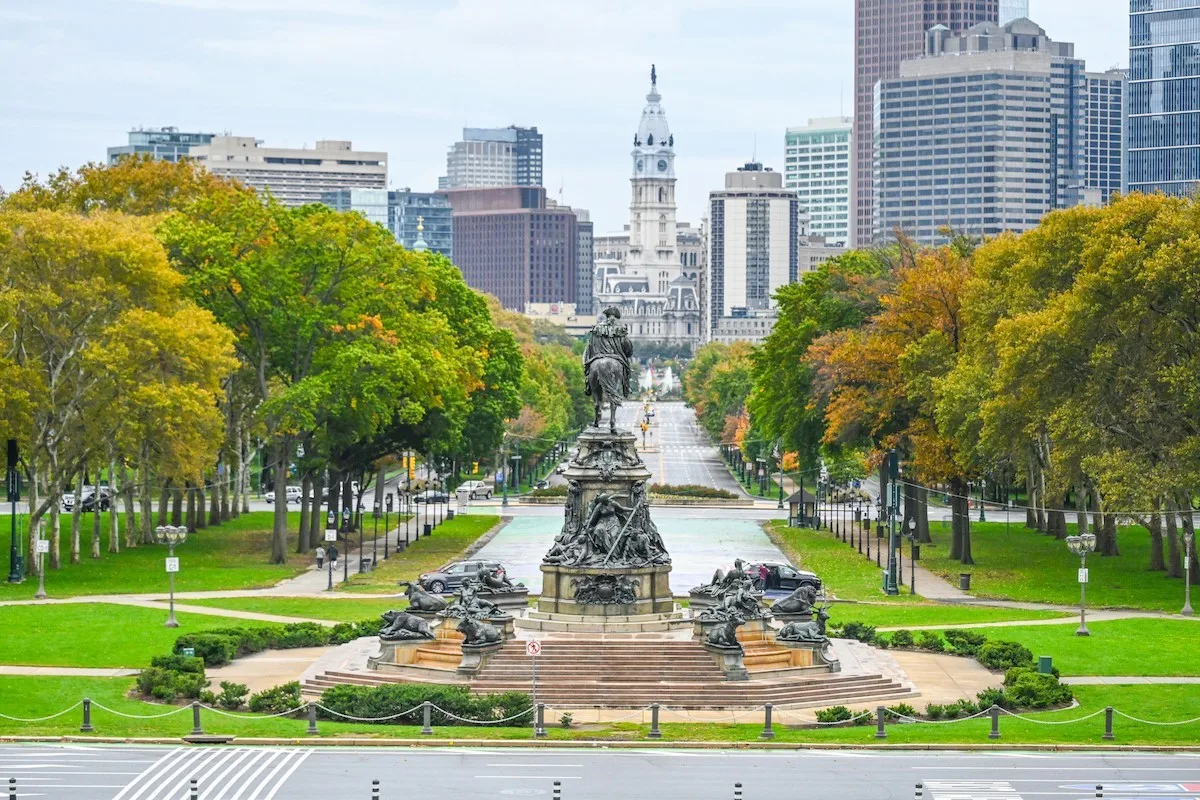
Philadelphia’s cheapest neighborhoods, including Frankford ($1,122.50), Tioga-Nicetown ($1,150), Oak Lane-East Oak Lane ($1,195), and Cedar Park ($1,195), can help renters looking for lower rents find affordable prices while maintaining access to Center City’s business hub and cultural richness. Renters in these communities can save $455-527.50 per month ($5,460-6,330 annually) compared to the city’s median rent of $1,650.
Philadelphia ranks among the more affordable major East Coast cities. Strategic neighborhood selection dramatically affects your housing costs, potentially saving you hundreds of dollars monthly while allowing you to stay connected to the city’s opportunities and culture.
Philadelphia‘s rental prices in 2026
Philadelphia’s median rent hovers at $1,650, based on Zumper’s internal data, which has analyzed rentals across all bedroom counts and rental unit types (studios, 1-bedroom, 2-bedroom, houses, condos, apartments) over a 30-day period to provide the most accurate neighborhood-level pricing. Philly’s median rent is fairly affordable when compared to other major North Atlantic metros like Boston, New York, and Washington, D.C. The city’s healthcare, education, biotechnology, and financial services sectors drive steady demand.
Quick stats:
- Citywide median rent: $1,650 (all apartment types)
- Most affordable neighborhood: Frankford at $1,122.50 (32% below the median)
- Maximum savings: $527.50 monthly ($6,330 annually)
- Affordable options: 45+ neighborhoods below the citywide median
But rent prices across the city do vary, and prices can flucatuate depending on where you look. Southwest Cedar Park rose 34.78% year-over-year, and Walnut Hill increased 32.61%, while Mayfair declined 21.48%, Cedar Park dropped 17.01%, and Point Breeze fell 10.89%. This variation creates potential negotiating opportunities in cooling neighborhoods, especially during off-peak months.
The cheapest neighborhoods in Philadelphia
Philadelphia’s most affordable neighborhoods balance substantial rent savings with practical city access. These neighborhoods keep you connected to the city’s jobs, culture, and urban amenities without the premium price tag.
12 affordable Philly neighborhoods compared
| Neighborhood | Median Rent | Monthly Savings | Transit Score | Walk Score |
| Frankford | $1,122.50 | $527.50 | 9 | 8 |
| Tioga-Nicetown | $1,150 | $500 | 10 | 9 |
| Oak Lane-East Oak Lane | $1,195 | $455 | 8 | 8 |
| Cedar Park | $1,195 | $455 | 9 | 10 |
| Mayfair | $1,197.50 | $452.50 | 8 | 8 |
| Dunlap | $1,225 | $425 | 9 | 10 |
| Tacony-Wissinoming | $1,250 | $400 | 7 | 8 |
| Logan-Ogontz-Fern Rock | $1,250 | $400 | 9 | 9 |
| East Parkside | $1,275 | $375 | 9 | 8 |
| West Oak Lane | $1,295 | $355 | 7 | 9 |
| Olney | $1,295 | $355 | 9 | 10 |
| Germantown | $1,295 | $355 | 9 | 8 |
1. Frankford – $1,122.50
Frankford offers Philadelphia’s lowest median rent at $1,122.50—32% below the citywide median—saving $527.50 monthly ($6,330 annually). This diverse, historic Northeast Philadelphia neighborhood, once a separate borough before consolidation, maintains distinct community identity along Frankford Avenue’s commercial strip. The Market-Frankford Line’s terminus keeps Center City accessible in 30 minutes, while 30.8% of residents enjoy commutes under 30 minutes to nearby employment centers, making this an ideal base for budget-conscious workers prioritizing both savings and reasonable commutes.
Transit access: 9/10 | Walkability: 8/10
Best for: Maximum budget-savers; transit-dependent renters; Northeast Philadelphia enthusiasts.
2. Tioga-Nicetown – $1,150
Tioga-Nicetown’s median rent of $1,150 sits 30% below Philadelphia’s median, saving $500 monthly ($6,000 annually). Recent price softening (-4.17% both month-over-month and year-over-year) creates opportunities for informed renters to negotiate. This resilient North Philadelphia neighborhood combines practical advantages—exceptional SEPTA access via the Broad Street Line and multiple bus routes—with community assets like local parks and Germantown Avenue’s markets, creating a connected, affordable base for renters who value authentic neighborhood character over trendy amenities.
Transit access: 10/10 | Walkability: 9/10
Best for: Transit-focused renters; negotiators targeting declining markets; North Philadelphia seekers.
3. Oak Lane-East Oak Lane – $1,195
Oak Lane-East Oak Lane has a median rent of $1,195, which is 28% below the citywide median—which translates to a savings of $455 monthly ($5,460 annually). The area has a recent year-over-year decline of -3.43%, giving renters negotiating leverage. This Northeast Philadelphia neighborhood feels worlds away from Center City’s hustle, with tree-canopied streets, well-maintained single-family homes and low-rise apartments, and proximity to Chelten Hills Park, creating a suburban enclave within city limits. Families and professionals choose Oak Lane for its residential calm and ease of parking while maintaining access to Philadelphia.
Transit access: 8/10 | Walkability: 8/10
Best for: Families seeking residential character and those who prefer a Northeast location.
4. Cedar Park – $1,195
At $1,195, Cedar Park matches Oak Lane, potentially helping renters save $455 monthly ($5,460 annually). Despite a -17.01% year-over-year decline creating negotiating opportunities, this West Philadelphia neighborhood offers strong value with 44.2% of residents commuting just 15-29 minutes. The neighborhood features tree-canopied streets, Clark Park as a community gathering hub, and Baltimore Avenue’s eclectic mix of cafes, bookstores, and restaurants.
Transit access: 9/10 | Walkability: 10/10
Best for: Car-free living enthusiasts; West Philadelphia seekers; negotiators targeting price drops.
5. Mayfair – $1,197.50
Bordering Pennypack Park’s 1,600 acres of trails, creeks, and wooded recreation, Mayfair offers a nature-adjacent lifestyle rare in Philadelphia proper. This residential Northeast neighborhood’s $1,197.50 median rent sits 27% below the citywide median, saving $452.50 monthly ($5,430 annually). A dramatic year-over-year decline of 21.48% might help renters significantly: lower rents can mean better negotiating power. Tree-lined streets, single-family homes mixed with apartments, and Frankford Avenue’s shopping corridor create suburban comfort within city limits.
Transit access: 8/10 | Walkability: 8/10
Best for: Negotiators seeking leverage; families wanting a residential atmosphere.
6. Dunlap – $1,225
Dunlap offers a median rent of $1,225. This is 26% below the citywide median, or $425 less per month on average. What’s more, Dunlap has seen both month-over-month (-9.09%) and year-over-year (-9.26%) declines in average rent prices, so renters looking for the best negotiating opportunities might like looking around this West Philadelphia neighborhood, which also has walkable streets near Malcolm X Park, proximity to University City’s job centers and cultural attractions, and easy access to the Market-Frankford Line.
Transit access: 9/10 | Walkability: 10/10
Best for: University City workers who want walkability without paying University City prices; grad students and postdocs seeking off-campus alternatives.
7. Tacony-Wissinoming – $1,250
Hugging the Delaware River’s edge, this Northeast Philadelphia neighborhood offers something rare in affordable Philly: actual waterfront living. At $1,250 (24% below median), Tacony-Wissinoming saves $400 monthly ($4,800 annually), while steady 3.09% year-over-year growth signals stability. The Delaware River Trail provides car-free recreation along the water, Tacony Creek Park adds green space, and Torresdale Avenue’s commercial strip handles daily needs—waterfront amenities without waterfront premiums.
Transit access: 7/10 | Walkability: 8/10
Best for: Waterfront proximity; renters comfortable with moderate transit access.
8. Logan-Ogontz-Fern Rock – $1,250
The Logan-Ogontz-Fern Rock area matches Tacony at $1,250, delivering $400 monthly savings ($4,800 annually). Year-over-year growth of 12.51% indicates rising demand, but the neighborhood still offers substantial savings versus the citywide median. This North Philadelphia neighborhood provides excellent SEPTA access via the Broad Street Line’s Fern Rock Transportation Center, plus local shopping and dining along Olney and Ogontz Avenues.
Transit access: 9/10 | Walkability: 9/10
Best for: North Philadelphia seekers; strong transit prioritizers.
9. East Parkside – $1,275
Bordering Fairmount Park’s thousands of acres, this West Philadelphia neighborhood offers something priceless: America’s largest urban park system as your backyard. East Parkside’s $1,275 median rent sits 23% below the citywide median, saving $375 monthly ($4,500 annually), while 30.4% of residents enjoy 10- to 15-minute commutes. The Philadelphia Zoo, Mann Center for summer concerts, and Lancaster Avenue’s corridor create cultural richness beyond the park access.
Transit access: 9/10 | Walkability: 8/10
Best for: Nature lovers, joggers, and dog owners; professionals working in University City or Center City West seeking short commutes; culture seekers.
10. West Oak Lane – $1,295
West Oak Lane‘s median rent is $1,295—22% below Philadelphia’s median—saving $355 monthly ($4,260 annually). Year-over-year growth of 7.92% indicates rising demand in this Northwest Philadelphia neighborhood. Known for its residential streets lined with mature trees, West Oak Lane offers access to Lorimer Park and local shopping along Cheltenham Avenue, attracting families seeking a quieter neighborhood feel.
Transit access: 7/10 | Walkability: 9/10
Best for: Northwest Philadelphia seekers; families wanting residential character.
11. Olney – $1,295
International character meets exceptional transit access in this North Philadelphia neighborhood. Olney‘s $1,295 median rent means a $355 monthly saving, on average, compared to the citywide median. Fifth Street’s corridor showcases Philadelphia’s diversity through Korean grocers, Cambodian restaurants, and West African markets, while the Olney Transportation Center’s SEPTA connections enable car-free living. Fisher Park offers green respite, and steady 3.6% year-over-year growth signals neighborhood stability.
Transit access: 9/10 | Walkability: 10/10
Best for: Car-free living prioritizers and families seeking diverse and/or walkable neighborhoods.
12. Germantown – $1,295
With rent at $1,295 a month on average, Germantown is 22% below Philly’s median rent, so renters could save up to $4,260 annually by picking an apartment in this historic Northwest Philadelphia neighborhood. Here, renters can find 18th-century architecture, tree-lined Germantown Avenue with independent shops and restaurants, and cultural sites such as the Germantown Historical Society and the Cliveden mansion.
Transit access: 9/10 | Walkability: 8/10
Best for: History enthusiasts; negotiators targeting price softness; families seeking established neighborhoods.
Tips for finding affordable rentals in Philadelphia
Strategic renters can hundreds monthly by following these approaches:
- Focus on value neighborhoods: Target Philadelphia’s affordable areas, such as Frankford ($1,122.50), Tioga-Nicetown ($1,150), and Cedar Park ($1,195). These deliver authentic Philadelphia living at accessible prices.
- Time your search strategically: December sees 40-50% less competition than other months of the year. Motivated landlords may waive fees or reduce deposits during slower months.
- Embrace roommates: Splitting Philadelphia’s median rent between two people drops individual costs to $825, requiring incomes of only $33,000 per person using the 30% guideline (rent should be no more than 30% of someone’s pre-tax income).
- Prioritize transit over proximity: Living 10-15 minutes from a SEPTA stop instead of 2 minutes can save $200-400 monthly. Several affordable neighborhoods score 9-10 for transit access.
- Target cooling neighborhoods: In areas where rents have declined (Mayfair down 21.48%, Cedar Park down 17.01%, Germantown down 7.5%), cite trends to justify lower offers.
- Move quickly: Keep documents ready and check Philadelphia rentals daily.
- Use the rent calculator: Calculate your housing budget using the Zumper Rent Calculator to see what rent levels work for your income.
For more Philadelphia rental market insights, explore Zumper’s Philadelphia rent research.
Frequently asked questions about Philadelphia’s affordable areas
What is the cheapest neighborhood in Philadelphia?
Frankford is Philadelphia’s most affordable neighborhood, with a median rent of $1,122.50, 32% below the citywide median of $1,650. This Northeast Philadelphia neighborhood saves renters $527.50 monthly ($6,330 annually) while offering 8/10 walkability and 9/10 transit access, making car-free living feasible.
How much do you need to earn to afford rent in Philadelphia?
Using the 30% budgeting guideline, solo renters at Philadelphia’s median rent ($1,650) need to earn approximately $66,000 annually. Roommates splitting costs need only $33,000 per person. Targeting affordable neighborhoods like Frankford ($1,122.50) brings solo requirements down to $44,900 annually. Philadelphia’s 45+ distinct neighborhoods mean renters at various income levels can find appropriate housing, but be sure to use our rent calculator help you figure out exactly how much you can afford based on your personalized situation.
Which Philadelphia neighborhoods offer the best value?
The best-value neighborhoods balance low rents with strong infrastructure. Cedar Park ($1,195), Dunlap ($1,225), and Tioga-Nicetown ($1,150) all have high transit and walkability scores while offering 26-30% savings versus the citywide median. These neighborhoods prove you don’t sacrifice infrastructure quality when choosing affordable areas.
Is rent rising or falling in Philadelphia?
As of November 2025, Philadelphia has been showing varied performance. Some neighborhoods, including Southwest Cedar Park (34.78%) and Walnut Hill (32.61%), rose significantly year-over-year, while others cooled: Mayfair (21.48%), Cedar Park (17.01%), and Germantown (7.5%). This variation means informed renters find value by targeting neighborhoods where demand has softened, especially during off-peak season (December-February).
Are Philadelphia’s affordable neighborhoods safe?
Safety varies by specific location, street, and time of day within any neighborhood. Before committing to a rental, research crime statistics through the Philadelphia Police Department’s website, visit the neighborhood at different times, talk to current residents, and trust your instincts. Many of Philadelphia’s affordable neighborhoods are well-established residential areas with strong community ties. Local knowledge beats broad generalizations, so evaluate each property individually.
What’s the difference between Philadelphia’s cheapest and most expensive neighborhoods?
Philadelphia’s rental market spans a wide range. The most affordable neighborhood (Frankford at $1,122.50) costs roughly 32% less than the citywide median, while premium neighborhoods can exceed $2,000. This $800-900+ monthly difference ($9,600-10,800+ annually) represents substantial savings potential through strategic neighborhood selection, without necessarily sacrificing transit access or walkability.
Should I live in downtown Philadelphia or the suburbs?
Philadelphia proper offers better transit access, walkable neighborhoods, and cultural amenities, eliminating car ownership costs ($5,000-10,000+ annually). Many of Philadelphia’s affordable neighborhoods rival suburban prices while providing urban convenience. Suburbs may offer more space and parking but typically require car ownership. Calculate total costs (rent + transportation + time) rather than just comparing rent numbers. For transit-dependent renters, Philadelphia’s affordable neighborhoods often deliver better overall value.
When is the best time to look for apartments in Philadelphia?
August is Philadelphia’s most expensive and competitive month due to student move-ins, while May typically offers the lowest rents and December brings the least competition. Winter months (December-February) provide the best negotiating leverage and concessions like waived fees or reduced deposits. Targeting neighborhoods with recent price declines (Mayfair, Cedar Park, Germantown) during off-peak months maximizes your negotiating power.
Related content