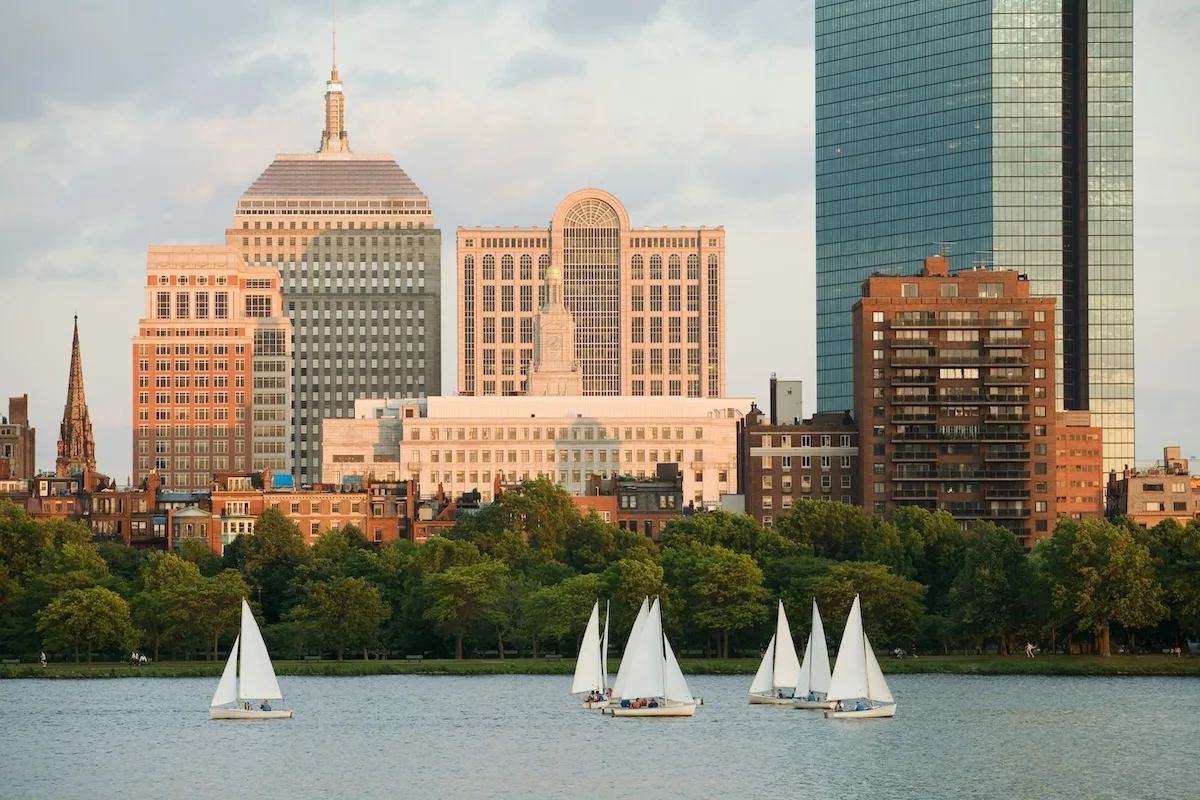
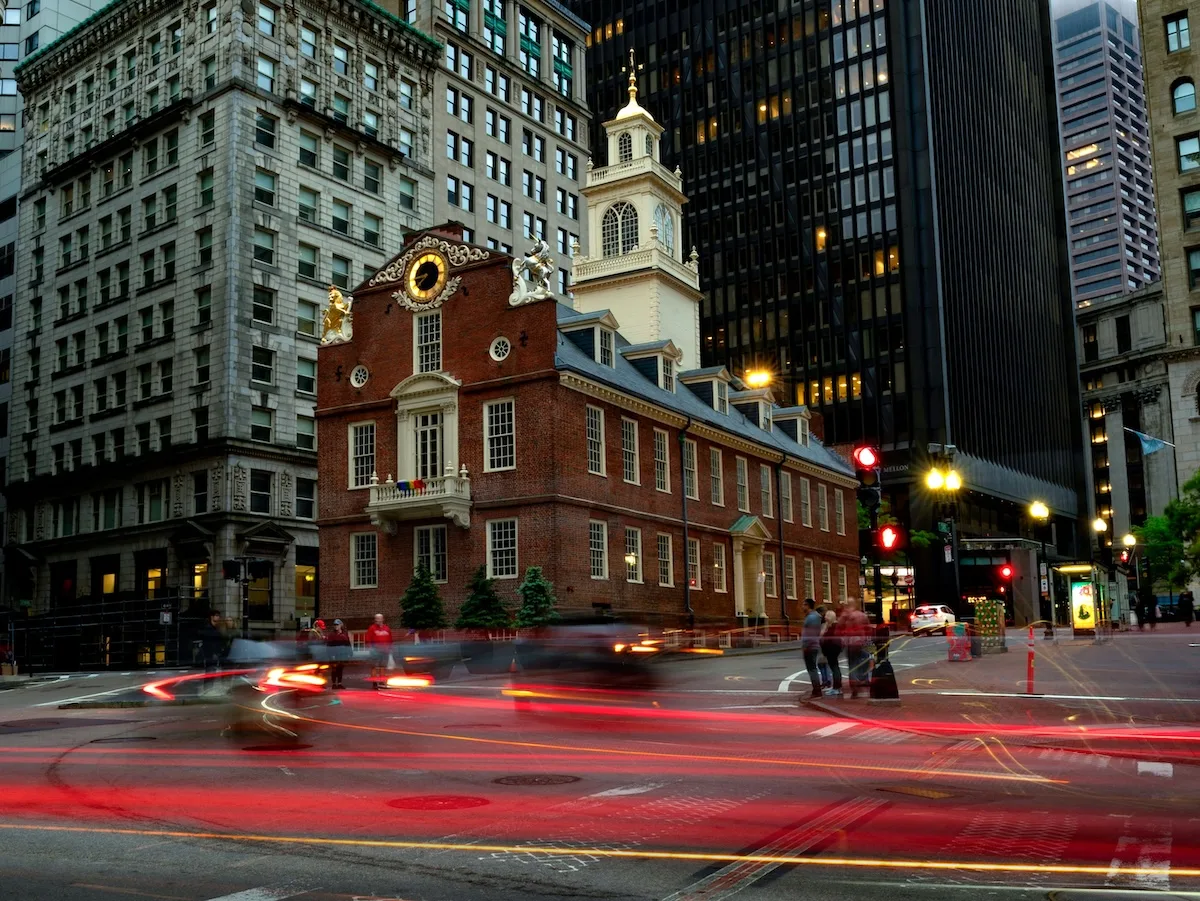
Boston is one of the country’s most in-demand cities, leading to higher rents over the last few years. However, there are pockets of affordability. In early 2026, the most affordable neighborhoods in Boston are Franklin Field North ($2,300), Franklin Field South and Eagle Hill (both $2,550), and Dorchester ($2,575), which offer savings of $700-975 monthly ($8,400-11,700 annually) compared to Boston’s $3,275 citywide median.
This guide breaks down Boston’s 12 most affordable neighborhoods. These neighborhoods deliver authentic Boston living with strong transit connections while maintaining access to the city’s job market and culture.
Boston’s rental market in 2026
With a median rent of $3,275 as of November 2025, according to Zumper’s internal data, Boston ranks among the nation’s priciest rental markets. This ranking reflects strong institutional demand driven by healthcare, education, biotechnology, and financial services, though the market is increasingly varied: some neighborhoods hold steady or appreciate, while others experience year-over-year declines of 5-15%, creating opportunities for strategic renters.
However, Boston’s affordability picture changes dramatically in neighborhoods beyond downtown. Over a dozen areas offer rents 15-30% below the citywide median while maintaining transit access and urban character.
Browse current Boston apartments to see real-time availability.
The most affordable neighborhoods in Boston
1. Franklin Field North – $2,300
At $2,300 median rent—30% below the citywide median—Franklin Field North is Boston’s most budget-friendly neighborhood. Budget-conscious renters can save $975 monthly ($11,700 annually). This Dorchester neighborhood borders Franklin Park, Boston’s largest green space (527 acres), featuring Franklin Park Zoo, William J. Devine Golf Course, White Stadium, and walking trails. The area showcases historic Queen Anne and Colonial Revival architecture. With 16% of residents commuting to work in under 15 minutes, it offers practical access to employment centers.
Transit access: 8/10 | Walkability: 9/10
Best for: Budget-maximizers; families seeking residential character at accessible prices; outdoor enthusiasts wanting proximity to Boston’s largest park.
2. Franklin Field South – $2,550
Franklin Field South has a median rent of $2,550, 22% below Boston’s median, which could help renters save $725 monthly ($8,700 annually). Recent -23.08% month-over-month change suggests negotiating opportunities. Proximity to Franklin Park’s golf course and zoo, plus Blue Hill Avenue’s neighborhood businesses, add lifestyle value beyond the rent savings.
Transit access: 8/10 | Walkability: 8/10
Best for: Families and dog owners seeking parkland access and residential calm; weekend golfers; budget-conscious renters.
3. Eagle Hill – $2,550
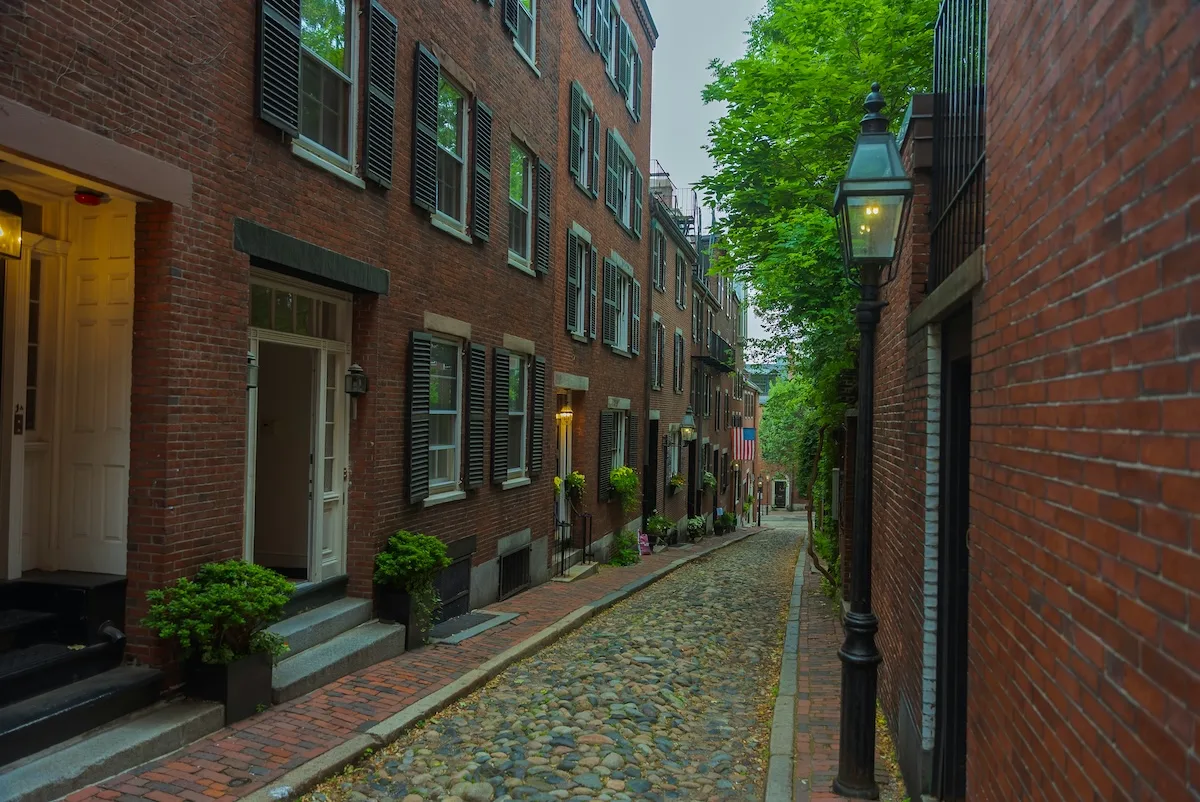
Eagle Hill matches Franklin Field South at $2,550, delivering $725 monthly savings ($8,700 annually). Blue Line access enables car-free living, saving an additional $5,000-10,000 annually. Historic Eagle Hill features Victorian architecture, streets named after Revolutionary War battles (Saratoga, Lexington, Trenton) and generals (Marion, Brooks, Putnam), authentic Mexican restaurants, classic Italian dining, and the community garden on Meridian Street.
Transit access: 9/10 | Walkability: 10/10
Best for: Renters prioritizing walkability; foodies seeking authentic Mexican and Italian cuisine; young professionals comfortable with moderate commutes; history enthusiasts.
4. Dorchester – $2,575
Dorchester offers a median rent of $2,575, which is 21% below Boston’s median rent and $700 monthly ($8,400 annually). This large, diverse neighborhood encompasses multiple distinct areas with unique character. As Boston’s largest neighborhood, Dorchester features the JFK Presidential Library and Museum, Franklin Park Zoo, and the Edward M. Kennedy Institute. The neighborhood’s Fields Corner area hosts Boston Little Saigon, a cultural district with over 200 Vietnamese shops and restaurants. The neighborhood’s craft breweries offer rooftop views and local beers, family-run ice cream shops serve nostalgic favorites, and vintage roller skating rinks provide retro entertainment.
Transit access: 6/10 | Walkability: 8/10
Best for: Families seeking space; diverse communities; foodies exploring Vietnamese, Cape Verdean, and Italian cuisine; an authentic Boston neighborhood feel.
5. Forest Hills-Woodbourne – $2,625
With a median rent of $2,625 (20% below Boston’s citywide median), Forest Hills-Woodbourne can save renters $650 monthly ($7,800 annually). Located in Jamaica Plain near Arnold Arboretum (a 281-acre public park managed by Harvard University), this neighborhood offers urban green space with Orange Line access at Forest Hills station. The area is also close to Sam Adams Brewery and Jamaica Plain’s eclectic local shops.
Transit access: 8/10 | Walkability: 7/10
Best for: Nature lovers; families prioritizing parks; renters comfortable with 30-40 minute commutes; arboretum enthusiasts and plant lovers.
Forest Hills-Woodbourne apartments
6. Ashmont – $2,675
Ashmont offers $2,675 median rent—18% below citywide median—saving $600 monthly ($7,200 annually). The Red Line’s Ashmont station anchors this neighborhood, providing quick access to downtown while preserving its residential character. Peabody Square around the station features chef-driven Italian restaurants and neighborhood bistros, combining historic architecture with modern amenities to create a walkable urban village steps from the T.
Transit access: 8/10 | Walkability: 8/10
Best for: Red Line commuters; families wanting Dorchester diversity with strong transit; Italian food enthusiasts; stable appreciation seekers.
7. South Mattapan – $2,700
South Mattapan median rent sits at around $2,700, which is an 18% savings ($575 monthly; $6,900 annually), and is located at Boston’s southern edge, near the Neponset River. Commute patterns lean longer (23.9% over an hour), making this neighborhood ideal for remote workers, families, and anyone prioritizing space and savings over downtown proximity. The Neponset River Greenway has trails and outdoor recreation, while the residential character offers a suburban feel within Boston city limits.
Transit access: 7/10 | Walkability: 7/10
Best for: Remote workers; families prioritizing space over a commute; maximum-square-footage seekers.
8. Wellington Hill – $2,700
Wellington Hill matches South Mattapan at $2,700—delivering 18% savings ($575 monthly; $6,900 annually)—but offers superior transit access for daily commuters. This residential neighborhood features quiet tree-lined streets, proximity to parks and Red Line stations, and a family-friendly atmosphere that balances affordability with practical Boston connectivity.
Transit access: 8/10 | Walkability: 8/10
Best for: Workers with downtown or Longwood jobs requiring dependable transit; families seeking quiet residential streets with Red Line proximity
9. Lower Washington-Mount Hope – $2,750
Lower Washington-Mount Hope delivers $2,750 median rent—16% below Boston’s median—saving $525 monthly ($6,300 annually). This neighborhood along Washington Street’s corridor balances residential calm with commercial convenience. Bus routes connect to Forest Hills Orange Line station, while proximity to Roslindale Village and Mount Hope Cemetery adds neighborhood character and accessibility.
Transit access: 7/10 | Walkability: 8/10
Best for: Balance seekers; residential neighborhoods with urban conveniences.
Lower Washington-Mount Hope apartments
10. Metropolitan Hill-Beach Street – $2,766.50
Metropolitan Hill-Beach Street delivers $2,766.50 median rent—16% below citywide median—saving $508.50 monthly ($6,102 annually). This Roslindale neighborhood borders Arnold Arboretum’s 281 acres, offering immediate access to botanical gardens and trails. The area emphasizes practical apartment features like outdoor space and storage, appealing to renters who prioritize functionality and green space over downtown proximity.
Transit access: 7/10 | Walkability: 8/10
Best for: Outdoor space valuers; families needing practical amenities; balance seekers.
Metropolitan Hill-Beach Street rentals
11. Neponset-Port Norfolk – $2,800
Neponset-Port Norfolk’s median rent is $2,800, which saves renters 14.5% ($475 monthly; $5,700 annually). This waterfront neighborhood attracts renters seeking residential tranquility with harbor access. The area borders the Neponset River Greenway.
Transit access: 6/10 | Walkability: 8/10
Best for: Waterfront enthusiasts; families seeking quieter areas; renters with cars or flexible commutes; kayakers and water recreation fans.
Neponset-Port Norfolk apartments
12. Stony Brook-Cleary Square – $2,800
Stony Brook-Cleary Square’s $2,800 median rent saves $475 monthly ($5,700 annually; 15% below median) at the Jamaica Plain/Hyde Park border. The Orange Line’s Stony Brook station provides downtown access, while the Southwest Corridor Park’s bike path and Cleary Square’s shops create neighborhood amenities. Dramatic recent declines (-23.08% month-over-month, -15.15% year-over-year) give renters exceptional negotiating power for waived fees or reduced deposits.
Transit access: 7/10 | Walkability: 8/10
Best for: Negotiating leverage seekers; Jamaica Plain/Hyde Park fans; Orange Line access prioritizers; renters targeting declining markets for better deals.
Stony Brook-Cleary Square rentals
Quick comparison: Boston’s cheapest neighborhoods
| Neighborhood | Median Rent | Monthly Savings | Walk Score | Transit Score |
| Franklin Field North | $2,300 | $975 | 9/10 | 8/10 |
| Franklin Field South | $2,550 | $725 | 8/10 | 8/10 |
| Eagle Hill | $2,550 | $725 | 10/10 | 9/10 |
| Dorchester | $2,575 | $700 | 8/10 | 6/10 |
| Forest Hills-Woodbourne | $2,625 | $650 | 7/10 | 8/10 |
| Ashmont | $2,675 | $600 | 8/10 | 8/10 |
| Southern Mattapan | $2,700 | $575 | 7/10 | 7/10 |
| Wellington Hill | $2,700 | $575 | 8/10 | 8/10 |
| Lower Washington-Mount Hope | $2,750 | $525 | 8/10 | 7/10 |
| Metropolitan Hill-Beach Street | $2,766.50 | $508.50 | 8/10 | 7/10 |
| Neponset-Port Norfolk | $2,800 | $475 | 8/10 | 6/10 |
| Stony Brook-Cleary Square | $2,800 | $475 | 8/10 | 7/10 |
Tips for finding affordable rentals in Boston
Map your income to neighborhoods: Use theZumper Rent Calculator to identify which neighborhoods align with the 30% budgeting guideline (rent shouldn’t exceed 30% of pre-tax income). Earning $100,000? Target the $2,550- $2,800 range. Earning $130,000? The $2,800- $3,200 range opens up.
Search December-February for leverage: Winter brings 40-50% less competition as students stay put and intern positions pause. Landlords facing seasonal slowdowns may offer a free month, waived application fees, or reduced security deposits.
Choose reliable transit over trendy neighborhoods: A 25-minute Orange or Red Line commute from affordable neighborhoods saves an extra $7,200-8,400 annually compared to trendy areas. That’s enough to max out an IRA contribution or accelerate student loan payoff while living in the same city.
Cite market data when negotiating: Neighborhoods showing year-over-year declines (Stony Brook-Cleary Square -15.15%, Franklin Field South -23.08% month-over-month) give you concrete leverage. Print the data, reference it respectfully, and ask whether the landlord can align with market trends by offering reduced rent or concessions.
Calculate car-free savings accurately: Perfect walk scores (Eagle Hill, Ashmont) eliminate $400-800 monthly vehicle costs—insurance, payments, gas, parking, maintenance. Add this $5,000-10,000 annual savings to your housing budget calculation; suddenly, “expensive” neighborhoods become competitive.
Visit neighborhoods at different times: Saturday afternoon crowds differ from Tuesday evening energy. Check transit during your actual commute time, walk the area after dark, and observe street parking availability before committing.
Compare across the full market: Browse the complete Boston rental market to see real-time availability, filter by your priorities, and spot pricing patterns that help identify emerging value neighborhoods.
Frequently asked questions about cheap Boston neighborhoods for renters
What is the cheapest neighborhood in Boston?
Franklin Field North is Boston’s most affordable neighborhood, with a median rent of $2,300 (November 2025), 30% below the citywide median of $3,275. This saves renters $975 monthly ($11,700 annually). The neighborhood offers excellent walkability with abundant sidewalks, shops, and services within easy reach, plus strong public transit connections. Franklin Field South and Eagle Hill tie for second at $2,550, offering $725 monthly savings.
Is Boston expensive to rent in?
Yes, Boston’s $3,275 median rent ranks among the nation’s highest. However, strategic renters find substantial savings in neighborhoods like Franklin Field North ($2,300), Eagle Hill ($2,550), and Dorchester ($2,575), delivering 20-30% savings while maintaining transit access. Over a dozen neighborhoods offer rents below the citywide median.
What neighborhoods are under $2,700 in Boston?
Seven Boston neighborhoods offer median rents under $2,700: Franklin Field North ($2,300), Franklin Field South ($2,550), Eagle Hill ($2,550), Dorchester ($2,575), Forest Hills-Woodbourne ($2,625), and Ashmont ($2,675). These combine affordability with strong transit (6-9/10) and walkability (7-10/10) scores.
What’s the cheapest area to rent near downtown Boston?
Eagle Hill offers the best affordability & proximity combination, with median rent at $2,550 (22% below the citywide median), which could lead to $725 in monthly savings, while scoring a perfect 10/10 for walkability and 9/10 for transit access via the Blue Line. About 13% of residents commute to work in under 15 minutes, making this neighborhood practical for downtown workers.
How much should I budget for rent in Boston?
Using the 30% budgeting guideline, Boston’s $3,275 median rent requires an annual income of approximately $131,000. However, several neighborhoods are affordable on lower salaries: Franklin Field North ($2,300) requires about $92,000 annually, while Eagle Hill and Dorchester ($2,550-2,575) need roughly $102,000-103,000. Use Zumper’s Rent Calculator to determine which neighborhoods fit your income. Keep overall cost of living in mind, as well.
Which Boston neighborhoods are best for families?
Dorchester, Ashmont, and Forest Hills-Woodbourne are among the best family-friendly areas, offering affordability ($2,575-2,675), residential character, and practical amenities such as parks. Dorchester ($2,575) has fitness centers, Ashmont ($2,675) delivers convenient Red Line access, and Forest Hills-Woodbourne ($2,625) offers Arnold Arboretum.
Are Boston’s cheap neighborhoods safe?
Boston’s affordable neighborhoods may vary in safety. Research specific areas using city crime statistics, neighborhood association websites, and local news to understand the neighborhood atmosphere. But keep in mind that many affordable Boston neighborhoods are residential family areas with strong community ties.
Do Boston’s cheapest neighborhoods have good public transportation?
Yes, most maintain strong transit access. Eagle Hill scores 9/10 (Blue Line), Ashmont provides Red Line access (8/10), and Wellington Hill offers 8/10 transit connectivity. Franklin Field North and South both score 8/10 despite being among the most affordable.
Finding your affordable Boston neighborhood
With some strategic location selection, finding an affordable area in Boston is possible. While the $3,275 citywide median challenges many renters, several neighborhoods deliver 15-30% savings while maintaining the transit access and urban character that define Boston living. Start browsing Boston apartments to find your next home.
Related content